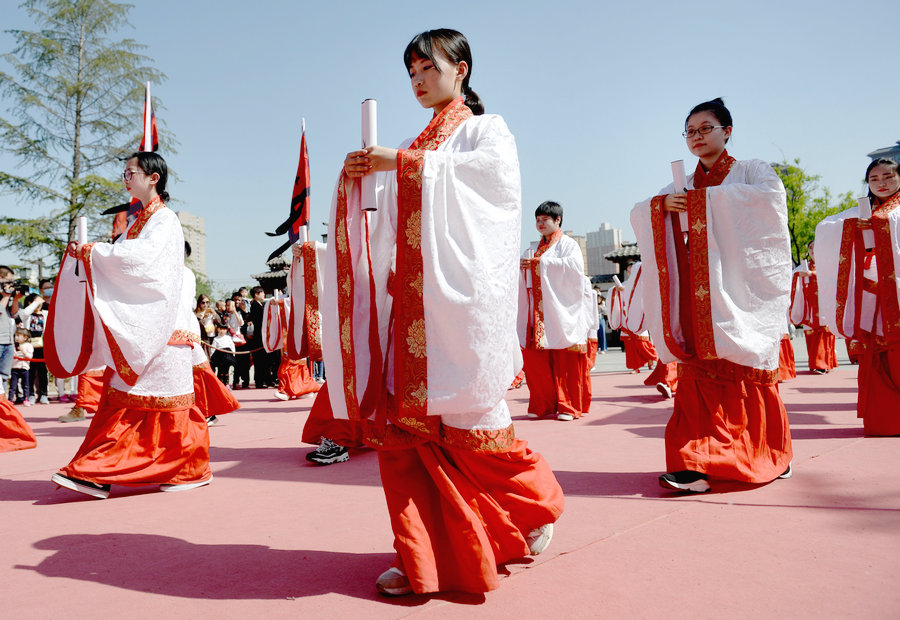
Coming-of-age Ceremony
Overview
The coming-of-age ceremony, historically significant in various cultures, marks the transition from childhood to adulthood. In ancient China, this ceremony was especially prominent, symbolizing a young individual's readiness to take on social responsibilities and privileges associated with adulthood. Notably, females in ancient China officially became adults at the age of 15, a milestone that was celebrated with a formal ceremony, illustrating the cultural importance of this rite of passage.
Historical Context
The coming-of-age ceremony has a rich history in China, with roots extending over 2,000 years. The Li Ji or Book of Rites, an ancient Chinese text from the Zhou Dynasty(c.11th century-256 BC), details the ceremonial rites that signified the transition into adulthood. This text outlines that the ceremonies were pivotal in acknowledging young people's entry into adult society, granting them the right to marry and the duty to contribute to family responsibilities.
Modern Relevance
In contemporary times, the coming-of-age ceremony has seen a revival, with many young people participating in these traditional rites as a form of cultural expression and identity affirmation. Events like those held in Xi'an demonstrate the enduring appeal of these ceremonies, showcasing a blend of historical traditions with modern interpretations. These ceremonies serve not only as a personal rite of passage but also as a cultural celebration, attracting interest from both participants and onlookers.
Role of Clothing
Clothing played a significant role in the ceremony, with participants donning garments that symbolized their new status. Hanfu, the traditional attire worn during these ceremonies, is experiencing a resurgence as young people seek to reconnect with their cultural heritage. The choice of clothing is not merely aesthetic but represents a deep connection to historical practices and societal values.
Influence of Confucian Values
Confucianism, with its emphasis on filial piety and societal roles, heavily influenced the coming-of-age ceremonies. The rites were often intertwined with Confucian principles, reinforcing the individual's place within the family and broader community. This connection to Confucian values underscores the ceremony's importance in teaching young individuals about their roles and responsibilities as adults. Article reference1. Han-style ceremony marks coming of age in Xi'an. chinadaily.com.cn. 2018Photo Gallery(5 pictures)CategoriesLifestyleTagTraditional CustomCatalogue1. Overview2. Historical Context3. Modern Relevance4. Role of Clothing5. Influence of Confucian Values- - - []








